Transcriptsyncs with video
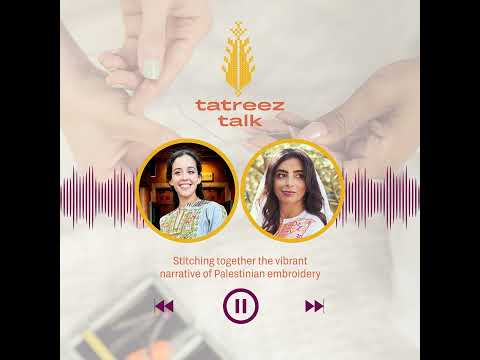
Hi stitchers, welcome to Tatreez Talk where we share conversations about Palestinian embroidery. I'm Amani here with my co-host Dina chatting with talented embroiderers and artists sharing their stories, inspirations, and the cultural significance behind their work. On today's episode, we are chatting with Habir, an urban designer and lifelong tatreez enthusiast using design as a way to connect with her Palestinian roots. She's also the founder of Thaqqa. Welcome to Thaqri's Thaqqa, Abir.
It's so lovely to have you. Thank you. Thank you for having me. Lovely to see you both. Yes, we're so excited to chat.
I am very excited to chat about a number of things that you are working on. But before we dive into that, can you start us off by just sharing a little bit with our listeners about you and your family's connection to Palestine? Yes, actually, both my mother and father were born in Palestine. My mother is from Jaffa. My father is from Jerusalem.
But during 1948, my mother's family fled from Jaffa. She was born in Ramallah. My father, during 1968, he was out, outside Palestine, so he couldn't get to Palestine after that. So unfortunately, My connection to Palestine was through the stories that my father and mother told, and through the stories, of course, of all my family members, because Palestine was present throughout my childhood through stories, through connections to the land, through people like relatives going to Palestine and coming from Palestine. So I really feel connected to Palestine, not because I'm Palestinian.
It's because Palestine is worthy of being connected to. The stories are so touching. Even when I was a child, I had this connection. It's not something that I developed as a grownup.
Unfortunately, my father didn't visit Palestine. Maybe he visited in 1980, okay, and that was it, because he was opposed to going back to a land where all our, like, properties, land, house are, are not owned by us anymore. But hopefully I have a plan to go visit Jerusalem soon, maybe this April. Inshallah. Inshallah.
I look forward to that. Yeah. Yeah. I also have not been back yet, so I'm excited to— once you go, we'll have to connect afterwards and hear about your experience. But I'm also curious to hear about, you know, you talked about the stories about Palestine and the connection through your family.
What was what was tatreez's role in your life as a Palestinian? You know, how did tatreez show up in your family and did anyone in your family stitch? Yes, actually, yes. So many of my father's family, the Dajani family, because they like craftwork and needlework, this is what I like. So naturally we were drawn to tatreez, of course.
So how did my, your question was about my journey. How did it start with tatreez?
Yeah, like, what was your connection with tatris, you know, growing up? As I told you, I like needlework. So when it came to doing like a project with needle and stitching, tatris was the thing that I went to. Okay. And seeing, of course, every Palestinian house has a tatris item, whether a cushion, a wall art, or address anything.
So we had plenty of that. So I grew up seeing the trees around me, seeing the, the coordination of the trees' colors that we are known for, like the reds and the magentas, and on a black background. So yeah, this was natural. I didn't feel that it started at some point. Okay.
But it was present since I was a child. And when I thought of doing a project that involved, like, my love to design, okay, and fashion design, Tatris was a no-brainer. So I immediately, like, started Ta'a, which is I want to say that Ta'a is not energy. Ta'a is the little window. I was searching for a name, actually, for my business.
I don't like to call it a business. It's just a project of mine. Something very— if you say business, you feel it has an economic— I understand. Yeah. Yes, economic aspect to it.
But it's like a project. So when I started Ta'a, I thought of this name because it's a name or it's a word that's been used by older generations for the small window. Okay. So yes, I started Ta'a and my journey matured, let's say, in Tatreez because I started my research. I started connecting with other there are people who like Tatris.
And yes, and it's an ongoing experience, okay, because it's something that's not easy and not, not too hard. Obviously, Tatris is easy, but not an easy thing to do because it's very sensitive to me. You know, I don't want to like tamper with something like Tatreez. We are really proud of this legacy, you know, and we want to continue doing something that's worthy of being called a Palestinian Tatreez. Yeah, and I love the work that you do there.
I didn't share at the beginning during the introduction, but the reason I got connected to Abir is because I had come across your work years ago. I mean, I had found, um, your Instagram profile. I cannot even remember how I came across it. And I remember that you had this one digital download for making your own, um, I think it was a smock dress and it had, um, this really beautiful taffris design, but you had them as like really big X's. So not the traditional, like 12-count, 14-count, but more like skipping.
So basically like an 8-count, I think, or like 6-count maybe. Um, and I thought it was such a a fun way to experiment with poteries in a way that still felt traditional. It was still, you know, the cypress trees and you still had some of the colors, but the Xs were very big. And so I, I knew I wanted to do one, but it took me forever. I don't know why, but it took me like 2, 3 years just to like get convinced on for myself, like the colors I wanted, the, the dress style that I wanted.
Um, and then I finally made it this year. And so I thought it was such a great opportunity to have you on the podcast since I, have like this connection now with ta'a. It's so funny, my, um, so my husband is a Iraqi and my Arabic is obviously not the best, and so I've— I need to talk to more Palestinians because I said taqa with the qaf, and that's so Iraqi. Um, but I like that you called— I like that you said it ta'a. I need to get— we need to talk more, but it ought to be.
Um, anyways, I just really love that what you were doing, so I was curious if you could like maybe give us a journey on how ta'a has evolved over time? Because I think it's kind— you guys have a new direction coming soon. Um, how did it start for you when you were thinking about it, and how has it changed as you've gotten more, um, I guess entrenched in the Thotheries world and all of the things?
The thing is that Thoth for me is like my side project, okay? So, uh, I can't say it started somewhere and now reached another place. It's just, it started and evolved and stayed the way it started. You know, whenever I try or whenever I launch a new season, let's say, or a new collection, okay, this is my experimentation of understanding how would I apply Tatris to everyday clothes. It's an ongoing try and error, let's say, of producing Palestinian garments that you can say, yes, it has a Palestinian— you know that it's Palestinian when you look at it.
This is my intention, at least. You know that it's Palestinian when you look at it. But on the other hand, you can wear it not as a traditional costume, you can wear it in everyday life, okay, and not like speak loudly or announce that it's Palestinian, but have it as an item. So when I started Taa, it was a start for me in fashion design as well, like a start for me on more than one thing, okay, and they both went together. So, uh, uh, Now that I've reached the place that I've reached to now, Taa is like, I wanted to be, I wanted to be like still an experimentation because I did not reach where I want to be, to be quite honest with you, with the brand.
Okay. But you've mentioned that, and I've mentioned to you that I have another, like, a small project within Ta'a, which is I want to share the digital library that I have now that I accumulated over the years because I started in 2017. And when I started, I referred to existing Palestinian tomes. Okay, I did not invent like the motif or the arrangement of motifs because I thought it's better to study from the masters, like, let's say, okay, in order to perfect it, to perfect this skill, because it's a skill, you know, because there is no tube like the other, you know, they're all, they have like an imprint of the person who created this taupe. So with this in mind, I have like a huge collection of digital Tatris, let's say, chest panels or side panels, or I want to share them with other people because it took me some time to produce, and I thought it's, uh, it's better that we preserve our, uh, toobs in this way.
Okay, um, so this, uh, a small project, it's called the Taka, uh, Tatris Archive. Okay, it'll be launched very soon, like by the end of or mid-February it'll be launched. Oh, inshallah, that's exciting. Yes, so, so, Lina, if you want to create another maybe Peace, you can refer to that collection because what I did, actually, the idea behind that came because I wanted to do a replica of an old Palestinian top, an exact replica. Okay.
The chest panel took me 6 months to complete. Imagine. Okay, so I thought it's a very large endeavor. I can't do that because I have other things to do. But why not give this digital, let's say, file for other people who want to replicate those toobs, you know?
And because it's not easy from an image to to copy the design. Okay, but we have very high resolutions of some of the tobes. Okay, uh, um, in the British Museum archives. That's why I could like replicate those tobes, you know, or not digitize the patterns. So the patterns are there, and they're not only, um like faithful to the design.
They're faithful also to the size. Okay, for example, the cross stitch is extremely small, you know. Yes, so I hope other people can make use of it and just reproduce those old tobes rather than bringing an old tobe and just cutting it and repurposing, let's say, or it's good to relive this journey of the person who did the statuette. And of course, definitely it took them so many, like, days, days and months to finish each project or each tulb. Yeah, no, absolutely.
I was going to ask, maybe you already answered my question, where did you source the tulbs or like the designs? From these silks? Is it— they were from pictures from the British Museum, or you have like your own collection? How are you— like, where, what was the original dress from? I wished I had my own collection now.
We all do. Yeah, but, uh, no, they're from high-resolution pictures from, uh, British Museum is the most prominent, uh, like, let's say, of those high-resolution pictures. Otherwise, I'll be reaching out for other people, my friends, because so many Palestinians have like an heirloom, let's express, okay, that they want to make it live on, okay, by introducing it to other people. This is a means of doing that. So I'll be, let's say, open to accepting any to digitizing any other talks that has been passed on through grandmothers by other people.
Wow, that's amazing. That is a huge endeavor, but I also feel like that's such a gift to not just the Tha'terizh community, but the Palestinian community. You know, we talk a lot about how so much of our history is not written, and it's always nice to have it done by Palestinians. I'm curious, like, as you're kind of, you know, doing this work and getting deeper into your knowledge of tatris, how has that shaped your, or how has it changed your view on tatris as you've kind of learned more and more about tatris and, you know, especially like experiencing and seeing these older dresses? Yes, I came to know that they did not use a waste canvas like we're using now.
They had very sharp eyesight. Yeah, that weave of the fabric was their guide. Like now I find it very difficult, although when I do very fine tatris, although I use waste canvas, but imagine they used to do tatris on black, like obvious, the weave was obvious, like because it was stitched in silk threads. Okay. And you can see that, by the way, if you see the images, the high-resolution images of the dresses, you can see the sheen of the silk.
Okay, so, um, what was your question, by the way? How did it— how did it change your relationship with Tatreez and your view of Tatreez as you've continued to learn more? It's, uh, it did not actually change my view, but it, it expanded my knowledge about how Tatreez was done. Okay. Um, and how it's, uh, like like a very genuine representation of the artistic view of the person who did it.
Okay, so now when I see, uh, uh, taubes, let's say, done— new taubes done with Tatris— I can see the difference between the taste, you know, because I don't know, um, maybe not reference like people. But when you see new tatris done in a new design, you can feel the difference between old and new and immediately know that, yes, they had so much time on their hand. For example, my tatris, yes, the big cross stitch, it's because I cannot produce garments which are, you know, uh, let's say priced moderately. Okay, if I do the very fine tatris, so it has so many things to it. Yes, definitely it changed the way I do tatris also, because actually when I started doing tatris, I didn't even use the waste canvas.
I invented the wheel then because I thought it's easier for me to see the— if you want, I can elaborate on that, tell you the way I used to do tatris. Oh yes, now what I did— now of course, when I used to be, when I used to be in school, school age, we used to use the waste canvas and the, uh, what's it called, it has not the waste canvas, the other one, marker. Yeah, etamine. Okay, yeah. So it used to be very straightforward, easy, because usually etamine is light in color, it's easy to see.
We were young, very good. But when I started, I thought I wanted to do something very fine, and I cannot wait until, you know, I don't want to do the waste canvas. So what I did is printing the Tatris pattern that I want to do on an infusible water-soluble paper, okay, and stick it to the back side of the— not so impressive, but the results were impressive because it was so tedious and like laborious, you know, it took so much to do. Okay, so I stuck it at the back side of the fabric, okay, and I used and had it on a hoop, okay, and stitched backwards like when I used to stitch. Yes, I used to imagine the other side, but the— I was gonna ask because if you go to the back side, yeah, how did you not follow the pattern?
Because all what I wanted to do, like achieve on the other side, is the line slanted, let's say this way, going, for example, this way back all the time. And the line slanted this way going on top all the time. It's just a way of thinking. Okay. But I tried, it worked.
Okay. And I even trained some ladies to do this in this way. But I couldn't sustain it. I thought, no, No, it's better to go back to the waste canvas. Okay.
But then I didn't do fine, uh, stitching, but I did experiment with the trees.
Introducing the drop that nobody asked for, Resolute RGL, the sneaker that takes centuries of Palestinian resistance and sells it back to you in leather. Co-founder Yossi Levin calls it empowerment. We call it exploitation. Same guy who once erased Palestinians from his projects in Haifa, now stitching tatrees into a shoe to build his quote-unquote multimillion-dollar brand. They say it's bridging local and global.
Translation: Palestinian women stitch, Europe profits, Israel wins. Limited edition, unlimited hypocrisy. Don't buy the hype. Boycott Resolute RGL. This anti-ad was produced by Tatrees Talk.
We stitch, we talk, we boycott.
I love that. That's really, uh, you rewired your brain in a way for Tatris. I don't like waste canvas, so when you were saying you did something different, I was like listening. I'm like, okay, what did she do? Try it.
It's a nice thing, but when you do it on a big scale, okay, um, it's, it's, it gets difficult because you have to have it inside a hoop when you remove it, put it, remove it, put it, it loses its sturdiness. But yes, and the other thing is that you cannot do— you have to do a single stitch, you know, or not a full— you have to put the needle in and then put the needle out. Yeah, yeah, perfect. And, you know, no puckers or, you know, no puckering. Yeah.
That is super creative. I'm— that's so interesting of a— so how do you like waste canvas now? Are you okay with it? Yes, actually very therapeutic. I love reveal parts, you know.
Yeah, that is, that is everyone's favorite part. Yeah. Yes, but, uh, luckily I haven't had any accidents with waste canvas because you might lose the whole piece when you like pull the waste canvas thread and it like tears maybe the fabric or it's a bit risky. Yeah. No?
With great risk comes great reward. This is, this is Tatris. That's amazing. Well, I'm curious, you kind of talked about it a little bit, but I'm curious about your design process because you are a designer by trade. Um, so I'm curious, like, how did you approach Tatris in a fashion line when you were first starting, and how has that maybe changed over time as well?
Like, what is— and how do you also balance kind of that contemporary with the heritage and the traditional way of designing poteries on, you know, things that you wear?
Yes. Now, you mentioned designer. Yes, I consider myself a designer. So no matter what the medium is, I'm able to see things in like blocks of color.
Lines, you know. So when I apply my knowledge as a designer, I didn't start with the trees from scratch.
So, so I applied my knowledge as a— I used to be a— I used to work in advertising, and I used to do a lot of graphic design as well. Okay. And I wanted to move away from advertising, so I chose fashion design as an outlet, like the first thing that I chose to move away from advertising. So the way I saw Tatris was so satisfying for me as a designer because I could apply my design views to a 3D thing that can be worn and can have a persona, you know, it's not on paper, not so And it can be styled as well. So Tatris is very easy to merge or to incorporate with contemporary items.
But I wish that we had this conversation at the time when my experience or my— this journey comes to a conclusion. I don't know if it will ever come, but honestly, with Taa'a, it's still an ongoing experimentation of how can I incorporate this traditional thing that I want to keep intact without deforming it, let's say, or putting my own input as Tatriz, do it in a contemporary way, in a way that's not a rival to the heritage, but something that adds to it, something that speaks the story of our present time. Because we as Palestinians, and I really love each and every single experience and Tatris done by any Palestinian, okay? Because it tells the story of our present time. Now, unfortunately, or I don't know, fortunately or unfortunately, but the West rules now.
So we have to have like the guy, what's guiding international fashion trends is the Western aesthetics. So I'm trying my best, you know, to detach my thinking or detach myself from what's considered to be trendy now or nice when you wear it. I'm trying to do that and do something very minimal. Okay, uh, it's just a journey, as I told you. It's— I didn't yet reach the conclusion, but I will be reaching the conclusion when I have a brand that when you see this garment or this item, you know that it belongs to Taha.
But I'm still, still, like, still on this road, you know? Yeah, absolutely. Absolutely. I guess also I'm curious, how do you hope kind of your customers feel when they wear these pieces? Do they— do you share any, I guess, Do you share a part of the journey of that specific piece with the customer so that they know, like, okay, this was inspired by a thobe from Yaffa, and here these colors are inspired by XYZ?
Like, I'm curious about what is that customer experience as well, because your pieces are beautiful. I mean, they're— I'm, I'm sure people like enjoy wearing them, but I bet you there's probably something even deeper happening too, because tatreez is just so— I don't know. It does all the things, it does all the jobs. Yes, great question actually, because when there is no story for the item, the item becomes lifeless, okay? And you leave the person like interpreting what the story is.
But unfortunately, in my case, and because of all my, you know, other things that I need to juggle, whether it's my kids, you know, my life, my, my day job. So I didn't yet give each piece what it deserves from my attention, like telling the story that, that's behind this piece. I'm pretty sure when, when I wear a piece that has a story, I can see it in a total different light and I can relate to it. But what I wish my customers or the person who wears a garment from us feels, I wish they feel that they're wearing an art piece. It's not just something that looks nice, but it's something that conveys an artistic, you know, like something artistic.
It's not something conventional, you know.
Yeah. And Palestinian, of course. Yeah, absolutely. And it doesn't have to be Tatreez. For example, my collaboration with Ahmad Al Khaldi, last collection, we really enjoyed it, but it came at a very difficult time that the collaboration was meant to be something very you know, happy, you know, something that shows our, you know, this deep emotions that we have towards Palestine and the yearning that we have to Palestine and being there and connecting with the land physically.
Okay, but it came at a time when Gaza's, like, the war on Gaza started. Okay, so it was difficult for me to navigate, and even up until now, it was so difficult for me to launch the collection, and it even changed. But the idea of collaborating with other Palestinians, okay, and it doesn't have to be Tatreez, of course, it's just another way of expressing ourselves as Palestinians and what being outside of Palestine means and how can we connect, because it's extremely important for us to do that, to connect with Palestine. We need it more than Palestine needs us. Definitely, definitely.
I think we all feel that very strongly. And I love the way that you are, as somebody who's also an artist, obviously, I love the way that you are taking that and Speaking on that through art, because obviously to me, fashion, all of this, it's all art. Excuse me. So I know you mentioned a little bit earlier about your digitizing project, but I'd love to dive in a little bit more on that because I'm personally very excited to hear about that journey. And I know many people who listen will be excited.
So can you share a little bit more about this project and what you're hoping, what you're hoping this project gives to the Tatreez community.
This season's hottest look: genocide. From the brand that brought you fast fashion comes fast-track complicity. Zara just opened its largest ever store in Israel, 45 square meters of settler chic while Gaza buries its dead. Their Israeli franchisee hosted far-right minister Itamar Ben-Gvir, who calls for shooting civilians and expelling Palestinians. His review: "Beautiful clothes, beautiful Israelis." Our review: ugly politics.
And yes, the jacket ad—mannequins shrouded like Palestinian bodies next to rubble? Zara called it a "misunderstanding" and kept cashing apartheid checks. Boycott Zara and all Inditex brands: Bershka, Massimo Dutti, Pull Bear, Stradivarius, Oysho, Zara Home, because genocide is never in season. This anti-ad was produced by Tatreez Talk. We stitch, we talk, we boycott.
Yes, I'm hoping to, uh, like, have this single tube, let's say, if I find a tube, okay, and I did, okay, to live on. Just not only the Tatris part, but the whole story where that taupe came from. If I got lucky with so many people, with some people like donating some high-resolution pictures and accepting for their taupes to be accessible for other people as designs, I'd like to know the story of the taupe and not only that, like specifications of the Taube, you know, in order for us or for any other person, if he wants to replicate this Taube, to be able to do it exactly like the measurements, the everything about it, so that it lives on because it's our treasure. It's very, for me, it's very like mystical. Okay, knowing that each tube has its own story.
I like this idea. And if this tube— because if this tube is digitized, it'll live forever, you know. This is what this— I hope I answered your question. Yeah, I did. Okay, great.
Yeah, no, no, no, definitely. I can definitely appreciate that. I love this idea also of, if you're able to, sharing those stories of those thobes. Um, do you have any, um, any of these thobes that you do have the story that you can share with any of our listeners? Yes, actually there is, but you need to see pictures and I'm not prepared, unfortunately.
But one of the thobes, uh, which I told you I did the chest panel and it took me 6 months to finish, definitely not working the whole day, but The story— I don't have the story of the Taube, unfortunately, because it's not owned by a person. It's owned by the museum, the British Museum. But I'll be sharing the dimensions of the Taube, which cannot be, for example, for any other person. He cannot make out what are the dimensions of the Taube if he wants to replicate it. But the thing is that it's not only the chest panel, it's the the whole thing— chest panel, side panels, sleeves, everything.
It's not something— if you— some, some people might like to do it, uh, to do a cushion with the same design. It's not about replicating the whole thing. It's about, uh, like archiving the Taube by Palestinians, as you said. It's like an initiative that can be very, very big, to be quite honest. If I want to include everything that's available online and I want to accept like any tape that has been made prior in 1940s, let's say, okay, and digitize it, but it can be done.
That's why I'm calling it like a living collection because I cannot do it all at once. It'll be like something that can be added on. Hopefully it'll get big, but this is my aim, to make Palestinian thobes live on and not just be in closets and, you know. Yeah, yeah. No, I love that idea.
I know for, you know, for me, the reason that my thobe is so special to me is because I know the story of how it was made because I made it myself. And so one of the things that I am working on or like trying to think about is how do I help people making a thobe document their story so that other people can then learn about it through that story and through seeing the thobe. So I really love that project and I'm excited to see it kind of come to life and stay in touch with it as well, because I think there's so many things that could come out of it, so many beautiful ways to connect for Palestinians to recreate and just to feel more connected exactly to Palestine, as you've said. Do you have any other things in the works for Taa'a, like in terms of the physical collections, or is this kind of the primary focus right now? Oh no, it's not the primary focus actually.
I'm doing— I use Taa'a also to raise money for Gaza. Okay. So I know that I advertise that profit is 100%, but it's not only profit. So all the proceeds, the gross of ta'a, all goes to Razieh. And now, and I've been approached by so many people wanting to do like auctions, for example, raising money, and they wish that I donate.
So I— this is what I do now, okay?
For example, there is actually a silent auction that what the Palestinian Children Relief Fund is doing in Illinois. I believe I'll be participating with two skirts, two embroidered skirts. Okay. And I'm waiting for Ghazy, like, or for my— not, I don't want to say grief. I don't want to, like, put it all on Ghazy, but honestly, it's just caused so much tension that I couldn't be, or I couldn't do creative work with Ta anymore, you know.
It's not that I paused it, but it's, um, uh, I'm not pressuring myself that I should produce something new, okay. It comes when I feel that there's a need for me to, uh, you know, launch something new. And that might be soon, I don't know. But because I have I have so many other things, unfortunately. If I did it, if I did this full-time, I would have given you a better answer.
But unfortunately, like, I have other commitments as well. No, no, absolutely. I, and I 100% that resonates. It's been a really difficult over 2 years now since the genocide started. And it's, it's gonna, it's gonna be kind of lingering in our hearts until you know, things are improving on the ground.
And it's very, that's very admirable of you for the work that you're doing and all that you're donating. So that's a lot. You're already doing a lot. It's not— you 100% answered my question and I love everything that you're doing. So thank you for sharing.
And Abiyedh, before we let you go, we always love to ask our guests one question, which is what, if any, Arab— like, what if if one or it could be many life lessons has Tatreez taught you?
Yeah. Tatreez was the reason I feel that I'm more Palestinian or I connect to Palestine, to be quite honest. If let's say we didn't have any heritage or any things that we can call Palestinian, okay, it'll be very difficult for me to connect with Palestine.
It's just because I used to live in Australia, okay? And back then, I was more doing tatris all the time. So whenever I take my kids, for example, to the basketball practice, or I used to have my tatris on me, so people used to wonder, what are you doing? So it's a conversation also opener, okay? A conversation starter, let's say, okay?
And I talk about Palestine through Tatris. So Tatris helped me connect to my roots.
And it's not only something that I really enjoy doing, it's so therapeutic. It's something that we need to preserve because the way that Palestinian heritage is undergoing theft, bluntly, okay, we have to— if we can do something about it, and this is the way I do it, this is the way I react to this, you know. We definitely, um, understand that, um, and we really appreciate your time, your words, like the work that you're doing and sharing with the world. I know everyone's going to be really excited to see the next chapter, um, so thank you Thank you so, so much for joining us and sharing all that. And if people want to learn more, where can they find you?
I'm only available online because I'm getting so many messages. Where can we find— I know I'm only available online, but I'm very responsive if anybody wants to reach out. Maybe not only customers, I want to work with other Palestinians out there. I don't know what's, you know, feel free to reach out. Anybody who likes to, or has an idea that would like to collaborate or work on something together, I am always open for collaborations and, or to help any other brands maybe, because so many Palestinian ladies that have this idea in mind that I want to start a tatreez business, it's very easy.
If you want, I can help, definitely. That's a beautiful, beautiful, beautiful, like, offer. I love that. I love that attitude of collaboration too. So we'll definitely share your website and your social for people to find you and connect.
Thank you so much, Abeer. We really appreciate your time. Pleasure. Lovely talking to you ladies, and hopefully we'll have another talk as well.
It was such a great conversation. Leda, I, you know this, but wait, did you— we mentioned this. Did we mention that? Yes, we mentioned this, that you stitched and wore that dress at the retreat. And like, you know, I love that dress.
And so many people were complimenting and kind of obsessed. And I love the creativity of the, you know, the way she interpreted the design and made the stitches larger. It actually made the piece very interesting and very modern. So, um, doing really cool stuff, uh, with her brand. I love seeing it.
Yeah, the experimenting is so fun with Talitha. It's kind of like with your photos, um, or like experimenting with different mediums. But there's also ways to experiment with the actual stitching itself. So I really loved that, that she had done that, and then she made it available. It was a free download, and I was able to just grab it.
And if you wanted to make the exact dress as as well. It's included the sewing pattern for that dress, which is really fun and introduces kind of other ways to engage with tatris. And you could wear it. That was the best part is I could wear it. People could experience it while I was wearing it.
And yeah, I just love that. And I think we mentioned this after we stopped recording, but just the way that she was so open to collaboration was, was really beautiful. And I think we need so much more of that in the tatris world because because there's so many things we could do with Thao Tri's, and it's better when we do it together. So I hope people, if you're listening, take her up on that offer. If you have an idea to collaborate with Thao, check out her collections, check out the new archive that she's working on.
By the time this airs, it might actually be live, so it may actually be available for you to check out. So we'll make sure to include all of her contact and ways to follow in the show notes. And, um, and yeah, I love it. So yeah, so thank you guys for listening to our episode of Talk. We want to hear about your Talk journeys, so share your stories with us at talk@gmail.com, and we might just have you on an upcoming episode.
Don't forget to subscribe to the podcast on your favorite listening platform, and be sure to leave a 5-star review. It helps other people find us as well. You can follow me at @linasthobe, Amani @menamani, and of course make sure to follow the pod at Talk Talk. We will talk to you soon.
About this episode
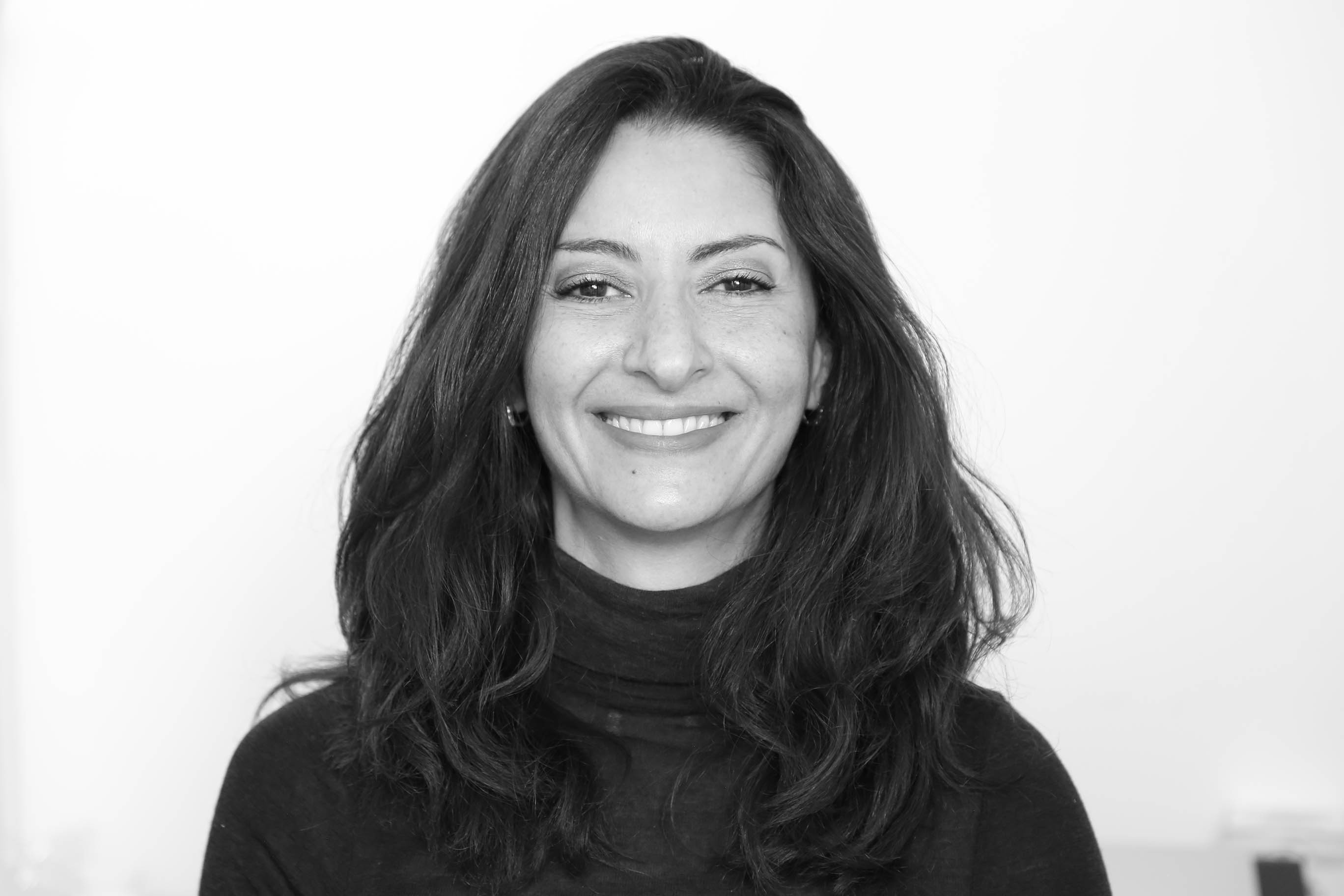
ABEER IS AN URBAN DESIGNER AND LIFELONG TATREEZ ENTHUSIAST, USING DESIGN AS A WAY TO CONNECT WITH HER PALESTINIAN ROOTS (@taqaclothing). Abeer shares her family's connection to Palestine — her mother from Yaffa and father from Jerusalem, though her family was displaced during the 1948 Nakba. She started Taqa Clothing as a way to experiment with applying traditional Palestinian embroidery to everyday clothing while maintaining its cultural significance.
For Abeer, Taqa is an ongoing experiment around creating wearable Palestinian designs that don't scream "traditional costume" but subtly carry cultural heritage, experimenting with larger stitches and modern interpretations while staying true to traditional patterns. She’s also developing a digital archive to document historical Tatreez patterns and ensure Palestinian embroidery continues to thrive.
Taqa has become more than just a creative project, it's now a vehicle for supporting Palestine, with all proceeds going to Gaza-based initiatives. Despite the difficulty of creating during the ongoing genocide, Abeer continues to participate in fundraising efforts like silent auctions. Ultimately, Tatreez has connected Abeer to her Palestinian roots, served as a conversation starter about Palestine, and taught her the importance of cultural preservation in the face of heritage theft. She’s open to collaborations and offers to help other Palestinian women who want to start their own Tatreez businesses.
You’ll hear about:
>> 0:50: Abeer’s connection to Palestine
>> 3:15: The role of tatreez in Abeer’s upbringing
>> 5:05: Starting Taqa
>> 8:41: The evolution of Taqa and developing a digital archive
>> 16:45: Reflections after exploring old Palestinian dresses
>> 19:56: Experimenting with how to tatreez
>> 24:45: Abeer’s design process
>> 29:02: The feeling when wearing Taqa
>> 33:17: Palestinian dress embroidery archive
>> 39:00: Fundraising through Taqa
>> 41:37: Life lessons from tatreez
Rate, Review, & Follow on Your Favorite Podcast Platform
“I love Palestinian embroidery and Tatreez Talk.” <– If that sounds like you, please consider rating and reviewing our show! This helps us elevate the vibrant narratives of Palestinian embroiderers and support more tatreez-ers — just like you — in learning more about tatreez and connecting with each other. You can find us on Spotify, Apple Podcast, and others -- just scroll to the bottom, tap to rate with five stars, and select “Write a Review.” Then be sure to let us know what you loved most about the episode!
Also, if you haven’t done so already, follow the podcast. We’re adding a bunch of bonus episodes to the feed and, if you’re not following, there’s a good chance you’ll miss out. Follow now!
Boycott Resolute RGL. Click here for more information.
Boycott ZARA and all Inditex brands—Bershka, Massimo Dutti, Pull & Bear, Stradivarius, Oysho, ZARA Home. Click here for more information.
Follow us @tatreeztalk
Follow Amanne @minamanne & Lina @linasthobe
Links mentioned