Transcriptsyncs with video
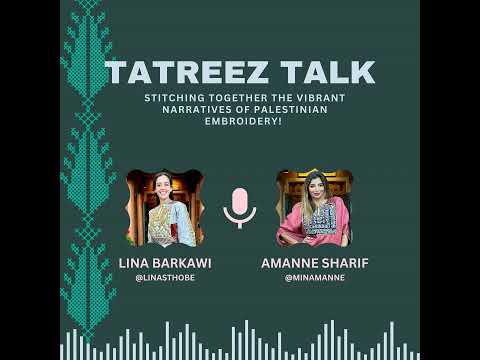
Hi stitchers, welcome to Tha3ri's Talk where we share conversations about Palestinian embroidery. I'm Amani here with my co-host Lina chatting with talented embroiderers and artists sharing their stories, inspirations, and the cultural significance behind their work. On today's episode, we are chatting with Hadeel, activist, researcher, creator, and one of the ladies behind Thobe Tale alongside her visionary mother, Rabaa. Welcome to Tha3ri's Talk, Hadeel. Thank you so much.
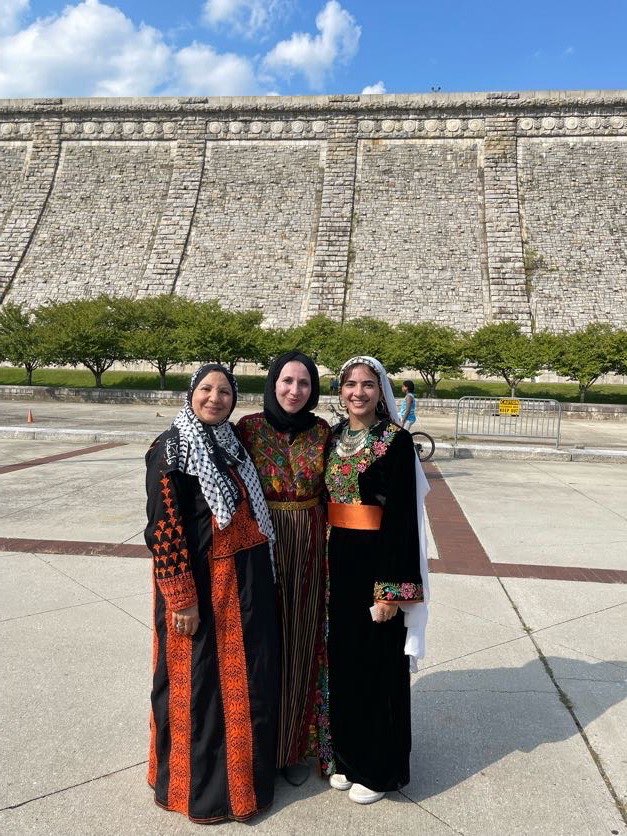
I'm excited to be here. Thank you for the invite. Yes, we're excited to have you. Um, I was able— I know Lena had met you previously, but I was able to meet you recently when we were in New York for Artatari's Talk live event. Um, and it was lovely to meet you and your mother and see the beautiful pieces.
Oh, we'll talk more about that, but like the beautiful vintage pieces that you guys, um, have and that you guys are preserving and passing on to other Palestinians. It's really exciting to have you. Yeah, absolutely. Thank you. It was great to meet you that day.
Absolutely. Yes. I'm glad you were able to join us. So we like to kick off by asking our guests to share a little bit about themselves with the listeners. Can you start off by telling us about you and your family's connection to Palestine?
Yeah, so I'm Palestinian. My grandparents were born and raised in Palestine, in Jerusalem, in a village specifically named Deir Aban, which is currently now Actually, it's a fully settlement called Beit Shemesh. By the nature of 1948, they were displaced to Jordan. So my parents actually were born and grew up in Jordan, and they specifically grew up in Palestinian camps. So my mom was raised in al-Rahdat camps and my dad in Madaba camps.
So the connection was always there. It kept present even though they never lived in Palestine, and I never lived in Palestine neither, but Palestine was always there. Our connection to the heritage, but really our connection to the struggle itself.
So that's my main connection. And being a Palestinian in the diaspora in the Arab world and then moving here to New York in 2011, it's an upgrade, let's say, to the diaspora experience. And we learned a lot, and I think now it's all connecting. You know, that my parents' experience, my grandparents' stories, our project is just feels like it's coming to a full circle. Mhm.
And you also grew up in Jordan before you came to New York, is that correct? Yes, absolutely. Can you tell us a little bit, just because you mentioned the difference in the diaspora living here in the US, living in New York now, can you tell us a little bit about your experience growing up as a Palestinian in Jordan? Yeah, so in Jordan, it's like you feel like you're still surrounded by nature, similar to what you hear about the nature of Palestine. There's a lot of Palestinian around you, but there's also this aspect of, let's say, racism, or like you always know that you're Palestinian, you're not Jordanian, even though we are officially Jordanian passport and all of that.
I also grew up in a village next to Al-Baqqa camp. Palestinian camp. We always had initiatives with them in the women's center under UNICEF on our YUN. So we always tried to work within the Palestinian struggle, different workshops. And this is actually how my mom connected directly to the Palestinian Tatreez.
That experience always made me feel I'm different, I'm Palestinian, but I'm really, really proud of it. But also connection to the Jordanian land itself, that we're not that far, we're not that different in reality. It's just how the current condition made us feel this way, and this like, yes, border, fake border, ideological borders. Um, moving in here, I was surprised by the amount of repression. Like, I always thought, you know, the United States, really freedom, and you can speak all your minds.
But then it's like how much it's controversial to even say I'm Palestinian. And this is something I didn't realize directly because it was like passive-aggressive environment until it took me time and awareness and a lot of education until like, oh, this is why.
And also, I would say connecting with the Arab world, with the Arab population here, Not everybody works for Palestine. Not everybody is really comfortable to say they're Palestinian. How our parents even have these boundaries to protect us. Let's not really talk about this. You don't have to be that open in your college or in your school that you're Palestinian.
It's okay. We're trying to move on with life. We love it. Our house surrounded with all Palestine culture, but it's okay in order for us to really move on. And this is definitely connected to their previous experience of how much repression living in the Palestinian camp and wars, like the Black Wars for my parents in Jordan, Black September War.
Currently, it's like, I'm here because this is my mission, actually. I'm here because it is hard to speak about Palestine. But it's possible. And of course, since 2023, this is becoming even more stronger. I grew up in Jordan next to the Palestinian camp for a reason.
I was introduced to Tatreez in depth because I have this mission to speak about Palestine. Like, the feeling that everything passed through my life and my parents' life to prepare us to this. Our life is really nothing like this seems like. This is our mission. And no matter no matter how hard, but in reality it's so beautiful and it's so meaningful to move on with this mission.
And yeah, that resonates so much. And there's so much built-up trauma from '48 that just continues to resurface in maybe different ways, but still it's there. And I think what you're doing with Thop-Til and just all the other work that you do is so incredible to kind of break out of that pattern of, you know, avoid avoiding or feeling like you need to hide. And I think things are just— things are shifting so quickly these days. Like, it's so different from 10, 15, 20 years ago, even in this country specifically.
And so I guess maybe now's a good time to kind of talk about Tathreez. When did you first get introduced to it and how did it kind of turn into part of what you call your mission as well? Yeah. So originally my mom was the queen of tatris, right? Um, I always see her interested in it, buying very unique pieces, um, going to her like women's circle and it's like, oh, there's this store have this phobe, there's this lady who's collecting these vintage phobe, just go to see it for them.
Or sometime collecting it. Um, our house is full of, you know, these cultural tatris hangs. Um, so it surrounded me, but I never really stitched. I never really went to study it. Fascinating, beautiful, but that was it.
Until my mom, which is really the creative mind behind Soap Tale, like this is— she couldn't join us today, but she's really the brilliant mind. And from her love to Tatreez, she initiated this project. Her idea was built on two things. First, she collected so much of it that she wanted to share it and she wanted to develop it into— to make it more to make herself more involved here in the United States with the heritage, with sharing it with the community, to reserve it, to celebrate it. And then 2003, it developed in spring 2003, it developed into a project.
I hopped in really to help her social media marketing, like logistics. She's always been the collector, the connection. Her relationships. Um, once I started digging deep, because her idea was we don't want just to sell and collect art, we want to learn about it and tell people about what does it mean, tell people about the stories, Palestinian women's stories in Jordan, um, about her mom's stories with, with the tatris. She had this vague idea that she wanted to, to bring to life, and I was just there trying to learn about it at the same time, really make it out there.
I never thought I would fall in love with Tatriz in that way. Like, I always saw, like, yeah, my mom, Tatriz, love her, okay, great. And then I started studying the fobs to be able to really be able to articulate this beauty into words through social media, through events, through conversation with people. And absolutely fascinating, whether the names of the patterns, whether how different patterns could actually deliver a story, like some flowers, some birds, some, uh, borders, like patterns. And what does that tell us?
What does— what is the woman's story when she was stitching all of this beauty? Whether actual knowledge or whether reflection I used to have, it's just Personally, it made me feel more connected to this art. Like, this is not just beauty. This really seems like it's coded. It's coded and it's, you know, so it's like, okay, I'm in love with this.
I don't know how to stitch, but I love looking at it, reading books, searching online, trying to rate it and trying to make these like social media designs, flyers. And that was it. Like, we established the online business mainly before we're out there as vendors. And that's my connection to tatreez. Now, definitely, it's evolving, as you said, Lina.
Now it's like this huge transformation that we're all experiencing. And I'm an activist, so it's all becoming both. Like, it's all pushing each other, and it is part of our resistance. It's not just celebration and beauty separate. It's culture and it's resistance through celebrating and amplifying this culture.
Introducing the drop that nobody asked for, Resolute RGL, the sneaker that takes centuries of Palestinian resistance and sells it back to you in leather. Co-founder Yossi Levin calls it empowerment. We call it exploitation. Same guy who once erased Palestinians from his projects in Haifa, now stitching Tatreez into a shoe to build his quote-unquote multimillion-dollar brand. They say it's bridging local and global.
Translation: Palestinian women stitch, Europe profits, Israel wins. Limited edition, unlimited hypocrisy. Don't buy the hype, boycott Resolute RGL. This anti-ad was produced by Tatreez Talk, We stitch, we talk, we boycott.
Okay, question then. Are you— do you stitch now, or do you know how to stitch at least? Girl, I think I know that. I know the technique I seen my aunt. So I actually was thinking about it yesterday.
I was— I saw a video of a lady who's stitching and I was like, I actually know how to do this. I really have to pick it up. My sister know how to stitch, but inshallah, and after seeing the, the Tatris talk live and, and hearing all of you guys like about your experience in the actual technique, um, I'm like, I, I have to start it just for joy, you know what I mean? So inshallah, that will be the next step in film too. Yeah, inshallah.
Okay, inshallah, next time I'm in New York, Amina and I are gonna force you to come and stitch with us. I'd love that. I some encouragement and inspiration. It will be my honor for sure. But I do really— I resonate with what you were talking about as far as like, Yani, the more you learned about Tetris, the more you fell in love with it.
And even the storytelling part, that's something that Lena and I always talk about and we both really appreciate and love and want to honor about Tetris. So I'm curious if you have any— if there's one particular story about a vintage thobe that's either like in your family or like a collection piece that you guys have that you could share with us? Yeah, I actually— so there was a thobe, the color was orange, right? And it was like, you know, a lot of the thobes or current pieces that we kind of distribute is we call it upcycled fashion where they extract a vintage thobe and they implement it into like more modern or whether it's thobe or whether other like jackets and vests and all of that. So this orange thobe, I start searching about it, just, you know, patterns.
And then it came up to be from Ghazza. Looking into the specific pattern, it was, um, there was a pattern called the spider burrow as a pattern itself, and it was replaced in the chest, and all around it was something like borders, something like paths. So now I'm just saying my really personal reflection on it. A couple of months later, I hear about Roosterboro City in Gaza, and it's a very farmer-based city. And this is when it hits me, like when I said this stories can be codes, not just nature, it's like Women are putting their vision about maybe cities that they lived in, about villages they lived in, and how they've seen it and how they've seen their own role in it, but the city role in the struggle.
Because this city actually, it's on the borders of Gaza, between Gaza and the 1948 land, and it's always exposed to aggression. It's always exposed to attacks and conflict. Definitely years and years before 2023. That's one of them. And then the second one, the Intifada, which now there's so much news about it.
The Palestinian flag in the first Intifada was banned. You can't even raise it. And then what did the Palestinian women decide? They're like, we're not going to raise it. We're going to wear it.
I mean, if this has made me think of anything, it's connecting this idea to trees is resistance itself. Yes, not at the same levels. Yes, not at the same repression, not at the same pain maybe, but it's women's way to participate in this struggle. Yeah, I'm curious about how do you guys find these vintage athwab, and have you been able to hear the story directly from the maker of the thobe itself? I'm curious if that ever came up.
Yeah, definitely. We always try. So my mom is the collector. She established her connection when she was in Jordan, so she continued to— when we came here, to continue once she started actually thinking about this as a project.
Initially, she was focusing on vintage thobe, or upcycled soap only. She started trying to get these stories out, tracing them back. But the fact of its diaspora, the fact that we're third and fourth generation after the Nakba, it's really hard. It's really hard to find a vintage soap that it belongs to the owner or even belongs to the grandparent, the grand mother of that owner. So the story is sometimes very vague, like A lot of the time we can get where did she receive it from, from which city, what's the name of her friend.
But to trace it directly as a full story, it's still now, it's a struggle. Now my mom have some connection with collectors currently in different camps who they themselves study as well, who they themselves have the same interest. There's this guy, his name is Asa, and he's like very, very knowledgeable. Sometimes we send him photos of certain thobes and we're like, do you know the story? Do you know any, like, specific city?
Or, you know, what's the story of this stove? And sometimes he shares it with us. We record it until it's time to, to post it online. Um, but it's, it is a definitely a challenge. The main knowledge I gain is through online resources about the, the names of the patterns and connecting it to which city and trying to reflect on the stories.
Uh, there's a Facebook page, uh, from one of the Palestinian centers in Jordan who lay down pictures and very detailed information. Now there's a lot of books that we study from, but yeah, it's not an easy thing to take on. We're like, yeah, we're gonna share the stories, and then you go to the resources and it's like you need to be a researcher really to be able to reach it. Yeah, but I think that's also why it's so important to do this type of work because historically, our stories And our history has not been written. And when it has been written, it has not been written by us.
Um, so I think that the— like, even as difficult as it might be for you guys to get the stories, like, any little information you guys can get and do try to get is clearly very valuable. Uh, I think it's very, very important, um, to have that and to pass that on. Uh, I'm I'm also interested to hear from you, like, you know, you talk about some of the pieces you guys have, you guys upcycle them. For people who are listening who might not know what that means, can you talk a little bit about what it means for you guys through Thrill of Thrill Tales to upcycle some of these vintage pieces? Right, so in general, a lot of people love tatris, but they're not necessarily want or feel like they're drawn to wear it as a thobe.
It could be too legit, too formal.
So we're like, okay, let's try to add some more variation, especially in the United States, whether keffiyehs, whether vests, because at the end of the day, we can still share this beauty and these patterns, even if it's different pieces. And this is actually like kind of an evolution of the tatris that we start seeing it like In the old days, it was garments. That's their fashion. Currently, we have different type of fashion, and it's type of merging the Palestinian diaspora culture with the ancestors' culture, let's say. Now, the upcycling technically is extracting tatris and patterns and sometimes full pieces like the full chest, the full panels, extracting them from vintage thobe.
And then implement them into jackets, into vests, even into like hatat or kafiyas. The idea is not just a modern piece, but also not even having a new piece. Like, they don't— our designer don't buy, don't like modernly make these jackets. A lot of the time they are thrifted. A lot of the time they are pre-owned.
And this is definitely for us to connect it to, like, we are also trying to reserve the land. Our grandparents, like, our original story, it's being faithful and loyal to this land to be able to preserve it, to be able to protect it. Currently, we are facing this whole problem with saving the Earth, not only us, like, and we can see that a lot of the environmental activists actually joining our struggle mainly for that concept. So our love for the land, whether in Palestine, whether in Jordan, in the United States, is the earth. One of our grandparents' and ancestral mission was to protect the land in its essence.
So this is like a small attempt, I would say, to kind of merge these two messages. First, to reserve the heritage and allow it to be worn by people as a modern fashion. But in its essence also, we're not creating new pieces. We are recycling and we're using thrifted pieces. And this is our attempt.
And I would say a lot of people really loving it, especially that it's handmade, especially when they hear about what this is about.
Yeah. Yeah. And I think what's really incredible about that approach is every piece is unique. It's one of a kind. Like, you cannot recreate this.
It cannot be produced at mass scale. Like, it is so special, which is why tatreez matters. It's so special when you're like, you know, for us, like for Amani and I, like, I talk about this all the time.
It's like, I'll never be able to give up my pieces because to me they hold a lot, a big piece of myself. But when they're used in this way, you're also kind of giving a little bit of that experience to the person who's getting it, because now they're getting something that nobody else has, um, and they get to rock it in whatever way, you know, makes sense to them. And there's something very special about that kind of experience and connection through tatris, even if the person who's receiving it doesn't practice themselves. Um, I'm curious. Yeah, I'm curious about your customers.
Like, who is the Who do you typically see interested in purchasing these beautiful pieces and any reactions that kind of come to mind or like, you know, experiences that you've had with some of these customers? Yeah, so I would connect it to our most recent vendor opportunity, let's say, in the People's Conference for Palestine. It was in Michigan, Detroit. It was 3 days of full experience of Palestine, Palestinian people, Arab people, and non-Arab. But it's just you're immersed in the culture, immersed in this love.
I would say it was beautiful and very emotional. Whether— okay, our main customers, it varies, right? I would say for vintage thobes, a lot of them Palestinian or Syrian or like from the Levant. Those are the people who will look at it, really appreciate it, and feel like I want to own this piece and really understand the value of it. Other pieces, more, more modern ones, younger generation of Palestinians and Levants or non-Arab.
The Kofiyyas, definitely non-Arab mainly, I would say. A lot of reaction, they would come and they would say, do you have this in extra large or do you have this in And we're like, no, this is the piece. This is what we only have. And this, as you said, Lina, seriously, like, this is something you look at their eyes and they're like, oh, wow. You know, like, this is how special it is.
I would say the other aspect we always stay conscious about is cultural appropriation. A lot of people actually aware of it and they come when they're not Palestinian or Arab and they ask us about this. They're like, if I wore a thobe, would that be cultural appropriation? And my answer was, and I'm curious actually to hear about your perspective because I might not be fully accurate, but it's like, it's not if you wear someone else's culture, it's about what do you do with this piece, how you represent it, and do you actually talk about the history of it? Would you talk about what are we going to share with you about this history?
Would you speak about Palestine and defending it and not just merely a fashion piece. And we took a decision this conference, we're not going to sell the vintage thobe or any, even the upcycled thobes to non-Arab. We just couldn't because it's hard to discern. It's like, what, you're going to ask someone about their history? They might not even be aware.
It's just so hard to discern. And people understood, even non-Arab, when we shared this with them, we're like, we're actually not selling this thobe. Or these thobes for non-Arab. It's just our way to preserve our heritage and to protect it with all the stealing of culture and food by the Zionists. It's something we need to make a decision about.
Yeah, yeah. I know everyone has different opinions on this. I actually feel very strongly about this. I think that there are so many ways non-Palestinians can participate in tatris and can wear tatris. But I feel very strongly that these vintage thwab, these vintage tatris belong to Palestinians and should go home to Palestinians.
I personally, you know, I look at other cultures that are, that have been and actively are being erased. You know, I look at Native American culture living in America and seeing how so much of Native American culture has been attempted to be erased and has been taken from Native Americans. I personally would never think to own traditional, like, Native American, like, wear. I just wouldn't. Would I— Maybe buy jewelry from a Native American artist who is selling, you know, Native American jewelry to non-natives, yes.
So I think that's personally how I view it. I do think that most non-Palestinians who own vintage pieces don't, like, don't do it in a harmful way. They just don't know that they probably shouldn't own those. And then, of course, there's a lot of Zionists that own and collect these pieces. So those are not the people I'm talking about.
I'm talking about the Palestinian— the non-Palestinian allies who own these pieces. I just say, you know, give it to a Palestinian. But that's my personal opinion on that. I don't know, Lina, if you want to share yours. Yeah, we've talked about this at length.
I think. Yeah, I think there's— and I think the nuance here is the vintage Thorpes versus like a thobe you make or a thobe that is like produced maybe not necessarily by them. Because the thing is with vintage thobes, I think there's a pretty decent assumption that can be made that it wasn't meant to be passed to non-family members. Like, that's an assumption I'm willing to make about it because before 1948, that wasn't typical. The only reason we see so much selling and buying of athwab nowadays is because it was turned to as a form of business in order to survive being exiled and becoming refugees.
So I think that's the nuance that people maybe don't realize. I think that they're supporting Palestinians, they're, you know, spending and they're, you know, showcasing this beautiful art form, like sure, but it was never meant to be that. It was meant to be an heirloom. It was meant to be passed down to a daughter or a granddaughter. It was meant to just be enjoyed by the person who made it.
And I think that's the part that is, it's just hard. It's like you said, Hadidah, it's really hard to tell if that person actually understands that significance and that deep connection that we as a people have to our tatrees. And not everyone gets it, you know? But I will say, like, I know a lot of non-Palestinian allies who are married to Palestinians and they're turning to tatrees in a way that helps them better educate their children, which are, who will be Palestinian, about our culture. And I think there's something really unique about that identity and that perspective.
Agree. Yes. But at the same time, a lot of these that I know are not buying vintage athwab. They're making their own or they are engaging with their husband's family's athwab in a way that's really powerful and beautiful for the future, for their future generations. They're a part of that experience.
They're a part of that tradition in that way, even if they themselves by themselves are not Palestinian. Yeah, I agree with that. I think we even, we know, I mean, obviously your mother is a non-Palestinian who actively raised Palestinian children. But we also, we have friends who are non-Palestinian who have married Palestinians and are actively raising Palestinian children who are collecting vintage thobes for their daughters or stitching their own thobes and stitching thobes for their daughters or learning the practice and learning the history to pass it on to their daughters. And I think that's a very different, unique— not unique, but that's a very different scenario.
I think they count. Yeah. And I think considering how Palestinians are everywhere and we are involved in so many other cultures, whether friendship or whether marriage, and it's like sometimes it's hard to discern are you Palestinian enough or are you connected to Palestine enough to understand? So it's a tricky point, but I totally agree with you, Amani. It's like we have to be careful and we have to really take this seriously.
Yeah, we could talk about this for hours.
But, you know, moving on from there. Okay, so I want to ask, kind of like looking forward, like looking ahead, when you think about like the future generations of Palestinians, what do you hope that they inherit from their own Tatreez journeys and from their own experiences with Tatreez?
This season's hottest look, genocide. From the brand that brought you fast fashion comes fast-track complicity. Zara just opened its largest ever store in Israel, 45 square meters of settler chic, while Gaza buries its dead. Their Israeli franchisee hosted far-right minister Itamar Ben-Gvir, who calls for shooting civilians and expelling Palestinians. His review: "Beautiful clothes, beautiful Israelis." Our review: ugly politics.
And yes, the jacket ad—mannequins shrouded like Palestinian bodies next to rubble? Zara called it a "misunderstanding" and kept cashing apartheid checks. Boycott Zara and all Intidex brands: Bershka, Massimo Dutti, Pull&Bear, Stradivarius, Oysho, Zara Home. Because genocide is never in season. This anti-ad was produced by Tatriz Talk.
We stitch, we talk, we boycott.
Take it as a form of resistance and liberation, not just as merely celebration.
Just the examples, like the power of culture, it's way beyond you go and you do dabke and you wear it to a wedding or to an event, especially in the current time. I mean, why the Zionists have attacked our culture so much? Because it's such a powerful tool for our liberation. And they did that against artists, against poets, Rasan Kenafani, Najat Ali, so many singers during the First Intifada, they banned their albums because they understand the power of sanity, it's way more the power of like materialistic power or even knowledge. And this is what we need now, especially in the diaspora.
We need to understand and revive this inner essence of what Palestine means and what does liberation mean and what does it require. How much faith would it require for us actually to face this power, to face this so many years of injustices and stolen lands and stolen heritage and culture. So we have a powerful culture. If we connected to it deeply enough, it can actually be a strong tool for us to just support our— this inner power to do the other things. Take it as merely celebration.
It's a luxury currently. Like, we cannot afford— there's not even enough time for us to do that. So for the future, the current generation, future generation, generation, or even the older generation. Culture is, for now, it's one of our powerful tools for liberation. Don't just put it very superficial, don't deal with it as a superficial way, um, to celebrate it.
We can celebrate it, but use it truly for its own depth. Yeah, no, that's such a, such a powerful point. And I'm curious to hear your thoughts as someone who you kind of fell in love with tatris maybe later. It wasn't something that necessarily you grew up practicing yourself or, or, or experiencing in that way. Because I, I struggle with this.
I struggle with this a lot. Like, a lot of people see the work that Amani and I do, for example, and they're like, oh, tatris, how cute! Like, that's so sweet, you guys are like, you know, embroidering, that's so beautiful. Like, love it, love it, whatever. But they, they're missing the whole point.
They're missing, they're missing, they're missing the depth. There's like no depth. And I even, like, we've talked about this on previous episodes about like the value of a Tathrii class, for example. People expect you to price it at like $25, and this is like part of our culture, why aren't you just doing it for free? Like, we, I've had, we've had those conversations like all the time and continue to have those conversations.
And so I struggle with this because Tathrii offers such an incredible opportunity to go deeper, but But something has to shift, something has to click for that person. And I'm curious if you've seen any of that, maybe in like some of the, like maybe at the People's Conference, for example, are there any conversations that, you know, all of a sudden you noticed it, you know, is it just that it's in the storytelling that they have to get more exposure to that? Or I don't know, it's like, it's something that I struggle with personally. So I'm curious if you have any ideas. Yeah.
I do believe it, like, to, to even get there, the person have to be patient enough to learn the things. I don't know everything, it's just a small experience. I would say that I have to repeat so many, so many more times. It's like to study the patterns for that realization to click in that depth. Um, we had a lot of conversation, but I would mention one incident, and it might represent this.
I don't know, there was a lady, I think she was not Arab for sure. I think she was from Latina, Latino, Latin American country, and she was looking at certain hatat with Tatris. This is not from Vintage Tatris. So there was a keffiyeh that has the map, but the map, it's actually made by different patterns. So she was looking at it, thinking about it, and And then she stopped and she was like, what is— what does this represent?
She didn't even recognize that it was the map. Once we told her, my mom was like, this is the Palestinian map in different patterns. She started crying. Something clicked within her. And she's not— I'm telling you, she's not Palestinian.
Wow. I don't know what she's seen to trigger that much emotions. Her tears I was like, what is this? Like, I, I, I don't even understand this specific situation. It's like, did it, did it just click for her that this is just more than art?
Did it click from, for her that this beauty actually looks like them? Again, I don't understand it, but like, yeah, there's certain things does not click by just merely information, but maybe seeing. And someone needs to be ready. Yeah, we need to be ready. This is why I'm saying information is not everything.
It's the faith and the belief, because we hear a lot of information all the time. That does not mean we recognize it or that we realize it. So yeah, maybe more time, more emotional engagement with this art, instead of technique and stories, like merely stories.
Hearing directly from women, which we have to do really fast because unfortunately, like the generation of Palestinian women during the days of Nakba, during the days of Intifada, we're either losing connection or they're actually passing away. But I feel like hearing direct their story directly, there's this emotional vibrational energetic exchange that could really activate that deep thing within us that sometimes it's hard to even describe in words. Yeah. Now you're making me think, I think I'm almost like, for me, I'm more passionate about the Palestinians out there. Like the non-Palestinians, great.
If they get it, they get it. Wonderful. Like no big deal to me, but Palestinians, I just, this is your culture. This is your art. Like, where is the depth?
But I will say, you're reminding me of a story recently that happened to me. I had, I had done a workshop months ago, um, and I guess one of the people who came to my workshop— it was a man, he came to the workshop, he did it, and he asked me for a couple extra kits because he wanted to do it with his kids at home. I was like, yeah, of course, like, go, go for it. And months, months later, he messages me on Instagram and he's like, hey, I just want to let you know that, um, this was such a beautiful experience. My kids, like, love loved learning Tathreez with me.
And it turns out that his teta used to do Tathreez. And so it opened up all these conversations intergenerationally about kind of her, his teta doing Tathreez. I think she had passed at this point, but it was opening up like memories for his father or for someone else in his family. And, and so now Khalas, I think for him, he gets it. Like the depth is there because it's very deeply connected to his family, even as a man, even as someone who's not like like, you know, typically the typical Tatreez artist, you know.
But yeah, I just, I always wonder how do we help extract some of that? Yeah, I like what Hadeel said. Hadeel, you said the emotional engagement, and I think that's, Lina, to your point of your story, that's where it clicked for this guy. And like for this non-Palestinian woman, Hadeel, that's where it clicked for her. Like I even think about when I have of when I do tatreez class, I do tatreez class like at least once a month.
And so I do them pretty regularly. And, you know, I always have at least one or two Palestinians in my class. And it's interesting how many of the Palestinians who do sign up for my class and take the class, like, you know, the first half of my class is all about the history of tatreez. We talk about like tatreez as what it is, what it was, what it is today, what it means. And so many of the Palestinians will be like, oh, I didn't know this.
I didn't know that there was a connection between each design and each city. Like, they kind of will know like, oh, like there's like certain styles for different cities, but like as knowing as deep as like the different motifs have names. So I think it's like it is this combination, right, of like telling the stories, seeing it, visually seeing it, and then getting this personal connection to tap into the emotions. It's like, I feel like honestly everyone, Hadeel, the work you and your mom are doing and all the other Tetris artists like all over the globe that we talk to, I feel like that's everyone's goal, right? Is like to kind of continue to spread that information, spread that knowledge and like connect those dots for people.
Yeah, yeah. And also I'm going to mention a song that inspired my sister, I would say. My little sister named Rahaf, she grew most of her life here. So there is a band we truly love, the name of the band is 47 Souls. I don't know if you guys— Love.
Are you kidding me? Love. Oh my God, they came to San Francisco a few years ago and I got to see them live and it was so much fun. And I know they probably won't come to America for a while, but oh God, Yes, I know. Have you heard their song Thobe?
Yes. So I need to— I haven't heard it. Yeah, yeah. So they say, and it means like, um, oh lady, oh Palestinian woman, go and stitch your own thobe, your own thobe that it's made by knowledge. This song, it connects this thobe to us, to the Palestinian women who live right now.
Like, we have different experience. We go to school and we try to be this independent and powerful and knowledgeable. And them singing this song, it just made us think about like, you can be like your ancestors even though you're experiencing something else. Like, these experiences might really make people realize this inner essence. Like, my sister, she loves this song because for her it connects it in this way.
And for me too, like I fell in love with it because now in our fashion shows, this is the first song we put on. You know what I mean? Yeah. This is a call. This is a call of connecting generation through Tatris, through soap, through this women, women power.
Yeah. So about like emotional engagement with Tatris. I would say more of that, such experiences. Yeah, that's— I love that. More emotional engagement with Tetris, everyone.
So I know we can talk for hours, but being mindful of time, can you share with us what's next on your Tetris journey? Is there anything that you are working on that we can share with the listeners? Sure. So nothing specific. We're trying to be in more conferences to engage with people more, having more informational flyers that talk about the patterns, not just to show, um, show the pieces, um, and people are definitely interested.
So we're hoping really for higher engagement, especially within Arab communities or Arab conferences. The second thing is really work with a bigger base of designers and, and women who do tatris in the diaspora, in Jordan, who are in Palestinian camps, who, as you said, Lena, they're using tatris as their way of survival and to support their families. And we want to showcase not just to help them financially and be this like channel of getting their products to the US, but supporting them financially, but also showcase their beautiful art and put this appreciation. And we try for those who are on social media, these fashion designers, to put their names and tags and stuff like that. But it's like upcycled fashion through connecting to a bigger women's base in the diaspora.
And the last thing we are really trying to make, to like plan an event where we have fashion show, music, maybe Tatreef's workshop, maybe different vendors, where it's a fundraiser for Gaza because this is a bigger part of what we're doing. We want to channel this art maybe in a different form as financial support for our people of Gaza. This is why all of our proceeds currently going to Gaza, but also as an experience for the women in the diaspora here, the Arab women, the Muslim women, to engage them with Tahrir into a deeper level. So I would say going more into events and arts and cultural depth engagement and more connection with the Palestinian women in the diaspora to really amplify their beautiful work and share it with everyone here. I love that.
So beautiful. Okay, one last question for you, Hadeel. Are there any major life lessons that you've gained from Tahrir? Is the importance of culture, the importance of culture, Tatris, but also beyond Tatris, seeing all of these emotional experience from people. It shows that we have so much resources and we surrounded by these resources, we only need to use them and connect them with, with the path.
So something that seemed for me superficial and just like a hobby for some ladies and for some moms and then feeling how much it can ground us, um, is the main lesson I would say for the past couple of years, um, and appreciate our moms because they know. Seriously, like, a lot of working through this project, we— me and my mom, we're different generations. She have a— she has a vision. I think this is how we can apply this vision, but there's so many points, and this is why it's her project really. So many points she would be like, no, we're going to do this and this thing would, would be the, the right way to, to move on with, with the project.
So, um, yeah, this is just a thank you, especially that she couldn't be here with us, but the brains behind Silk Tale is Rabassa. Um, yeah. Ah, so beautiful. Thank you so much, Hadil, for joining us. It's been such a pleasure.
Um, please share where everyone can find you guys— Instagram, website, wherever people can find you. Yeah, we are on Instagram, silk. Tail. We also have the website soaptail.com, Facebook Soap.Tail. So also on Etsy, so like the basic platform.
You can DM us about questions, connection, where we're gonna be next. And I'm in the background of the page, so inshallah we'll be in direct communication. And thank you ladies so much for the invite and for all the knowledge that you share with us. It's such a pleasure to meet you, but also to have this discussion. It means a lot.
Seriously, no, we're excited to have you. Thank you so much for being here with us.
I'm glad we were able to have Hadil. Um, hopefully next time we can have her mom, um, back to join. Uh, but great conversation. And I think, you know, when she was talking about how she personally connected with the threes by learning the depth of the threes, and then we continue to kind of talk about that emotional engagement, I mean, it's all connected. We talk about it so often, but I think these conversations just reinforce that.
And for me personally, just kind of like encourages me to continue to push forward with that. And it's great to see that, you know, even though Hadeel might not be stitching quite regularly yet— we're going to get her there— but it's nice that, you know, we talk about like getting people to stitch really helps other people understand. But I think it's like it's all these different pieces, right? It's getting people to stitch, but it's also getting people to understand the stories. It's getting people to see the beauty and all of that.
So, um, just always nice to have different perspectives, um, especially because I'm sure Hadid talks to so many different people through the work she does. Absolutely. No, totally. Um, and if any of our listeners are in town or catch them in a vending situation near them, like highly, highly, highly recommend. Um, I am actually one of her customers.
I got— I had my— I've been having my eye because, Amani, you have so many of those gorgeous, um, garden thulbs. I know, and I've been dying to get one. So I— she had it, she had one that I was like, I had my eye on during the talk live event. And I, I— who did I tell? Did I tell you?
You told me and I said buy it. Well, I told, I told someone, okay, I'm gonna, you know, I'm just gonna— if it's there at the end of the night, then I'll get it, you know, trying to like justify. Because I told you that means it's nasli. Cheap and that God wants you to buy it. And like, who are you to deny God's will?
That's how I justify my insane purchases. How many, how many do you have? I don't want to talk about it.
I actually— so yesterday we hosted my cousin's bridal shower at the house, and some of the girls who were here, I was talking to them, like, obviously I know them, and, um, I got like— we're talking about tatris and thwaab, and they were like, what are you gonna wear for her hinda? I was like, do you guys want me to show you my thobe collection? And I took them into the guest room where I have my thobe collection and showed them. And I was like, these are all my thobes. But I like remember, I was like, oh my God, I have so many garden thobes.
But like, they're so pretty. They're beautiful. They're absolutely gorgeous. Oh yeah. So anyways, now I have one too, so we'll be matching.
Um, I love it. Yeah, they're just so— they're so special and so vibrant. It's crazy. Yeah. Anyways, it was such a wonderful conversation.
Thank you, listener, for listening to Talk. We want to hear about your Talk journeys, so please share your stories with us at Talk@gmail.com, and we might just have you on an upcoming episode. Don't forget to subscribe to the podcast on your favorite listening platform and be sure to leave a 5-star review. You can follow me at @LinaStob, @Amani@MinAmani, and of course follow the pod at Talk. We will talk to you soon.
About this episode
HADIL IS AN ACTIVIST AND CREATOR BEHIND THOUB TALE, ALONGSIDE HER VISIONARY MOTHER RABA (@thoub.tale). She shares her family’s displacement from Dayr Aban and how growing up near Al-Baqa’a refugee camp shaped her commitment to identity and struggle. Moving to New York revealed the repression of Palestinian identity in the U.S., clarifying her purpose: to speak intentionally about Palestine and her family’s history.
Raba is the original visionary behind Thoub Tale, which collects and preserves vintage Palestinian thobes. Hadil joined to support logistics and social media, but soon fell in love with tatreez itself—studying motifs as a coded language of women’s memory, carrying history, geography, emotion, and resistance.
Today, Hadil and Raba upcycle vintage embroidery into modern garments in ways that honor sustainability and protect ancestral work, prioritizing pieces returning to Palestinian hands. Hadil hopes future generations approach tatreez not just as aesthetics, but as a living practice of liberation, storytelling, and connection to land.
You’ll hear about:
>> 1:18: Hadil’s connection to Palestine
>> 2:47: Experience growing up in Jordan and then moving to the US
>> 6:59: Introduction to tatreez and the start of Thoub Tale
>> 13:10: A story of an orange vintage thobe
>> 16:03: The process of collecting and upcycling vintage athwab
>> 23:01: Customers and cultural appropriation conversations
>> 31:22: What Hadil hopes future generations will take from tatreez
>> 43:56: What’s next
>> 46:11: Major life lessons from tatreez
Rate, Review, & Follow on Your Favorite Podcast Platform
“I love Palestinian embroidery and Tatreez Talk.” <– If that sounds like you, please consider rating and reviewing our show! This helps us elevate the vibrant narratives of Palestinian embroiderers and support more tatreez-ers — just like you — in learning more about tatreez and connecting with each other. You can find us on Spotify, Apple Podcast, and others -- just scroll to the bottom, tap to rate with five stars, and select “Write a Review.” Then be sure to let us know what you loved most about the episode!
Also, if you haven’t done so already, follow the podcast. We’re adding a bunch of bonus episodes to the feed and, if you’re not following, there’s a good chance you’ll miss out. Follow now!
Links Mentioned
>> Thobe by 47SOUL
Boycott Resolute RGL. Click here for more information.
Boycott ZARA and all Inditex brands—Bershka, Massimo Dutti, Pull & Bear, Stradivarius, Oysho, ZARA Home. Click here for more information.
Follow us @tatreeztalk
Follow Amanne @minamanne & Lina @linasthobe
Links mentioned